You approved the budget, the clicks arrived, and the schedule looks about the same. That gap is where most Google Ads for medical practice campaigns live: paying for attention instead of appointments. Bigger budgets rarely fix it. What does is tighter control over who clicks, what they read next, and what your front desk does with the call. Our paid media team for medical practices sees this weekly.
What Google Ads for Medical Practice Budgets Actually Buy
Healthcare Clicks Cost Real Money
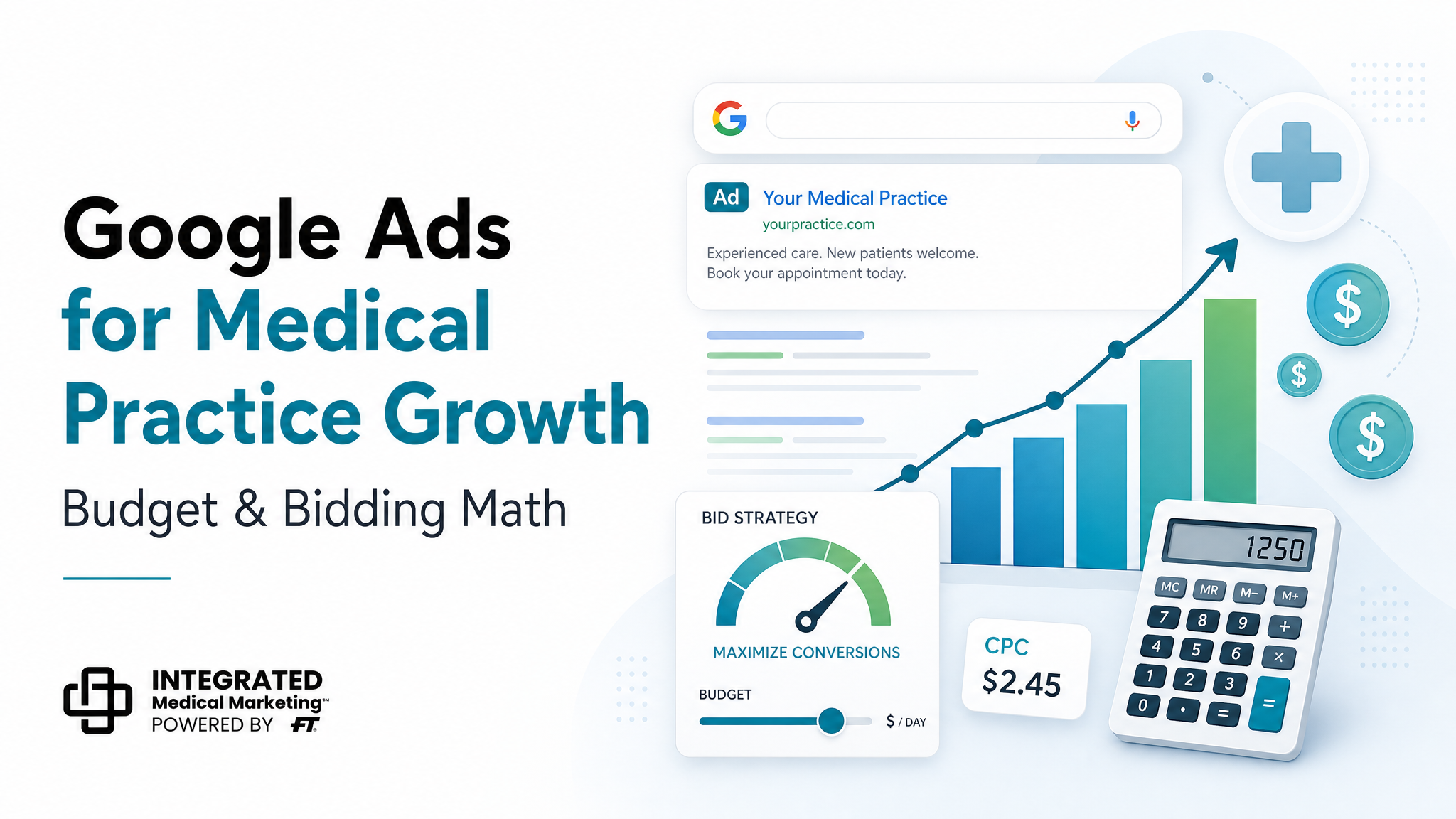
Search clicks in competitive specialties often run $15 to $30, with bariatric surgery and orthopedics near the top. At $20 a click, a $2,000 monthly budget buys about 100 visits. That’s the whole month. Ten clicks a day can’t support four campaigns.
Build the Budget Backward From One Patient
If 100 clicks produce eight inquiries and half of those book, you added four patients. Decide what four new patients are worth across a year, then judge whether $2,000 was cheap. Fund one campaign properly before you open a second.
Match Types and Negatives Control Who Clicks
Broad Match Spends on Curiosity
Broad match invites students, job seekers, and people three states away. A pediatric practice bidding broadly on “pediatrician” pays for salary research and residency questions. Nobody in that group books. Intent lives in the modifiers.
Tighten the Keyword Set Every Week
Start with phrase and exact match, then read the search terms report weekly. Add negatives as fast as you spot them: jobs, salary, school, free clinic, and any insurance plan you don’t accept. One shared negative list beats patching each campaign.
Ad Assets Do the Qualifying Work
Patients Scan for Logistics First
Before credentials, a patient checks four things: are you close, are you open, do you take my insurance plan, and can I reach a person. Ads that skip those get skipped. Distance beats reputation.
Fill Out Every Asset Slot
Responsive search ads accept up to 15 headlines and four descriptions, so give the system real material rather than three versions of your practice name. Add location assets and call assets that match your phone hours. Point sitelinks at specific procedure pages, not the homepage.
Message Match Between the Ad and the Page
The Homepage Drop Kills Conversions
An ad promising same-week allergy testing that lands on a general homepage makes the visitor search again. Most won’t bother. They click the next practice instead. The ad was fine. The handoff wasn’t.
Build One Page Per Promise
Repeat the ad’s wording in the page headline, put the phone number where a thumb lands, and hold the form to five fields. Our portfolio of medical websites and landing pages shows how narrow these pages should stay. A twelve-field form is a filter.
Policy and Privacy Guardrails
Health Advertising Has Its Own Rulebook
Google’s healthcare and medicines advertising policy requires certification for categories like prescription drug services and health insurance, and it restricts certain drug terms in both ads and landing pages. Approval isn’t automatic. Disapprovals can stall a campaign for days.
Keep Patient Data Out of the Plumbing
Ad platforms are no place for protected health information. The HIPAA Journal’s overview of HIPAA marketing rules explains why patient authorization matters. Keep ad copy condition-neutral, use compliant form handling, and audit what your tracking tags actually collect. We build medical Google Ads campaigns with that constraint in place from day one.
Measurement That Ends in a Cost Per Patient
Most Practices Can’t Trace Their New Patients
An MGMA Stat poll of 449 practice leaders found that 42% don’t track how they acquire new patients. Without tracking, ads become guesswork. Phones complicate it further, since plenty of medical inquiries still arrive by voice.
Track the Call, Then the Booking
Use a dynamic tracking number per campaign and count calls past 60 seconds as conversions. Better still, import the booking from your scheduler so Google optimizes toward patients who showed up, not form fills. Report cost per booked patient monthly.
Frequently Asked Questions
Q: How much should we budget to start? Fund one campaign at a level that buys at least 100 clicks a month in your specialty, which usually lands between $1,500 and $3,000. Below that, you won’t collect enough data to improve anything.
Q: Can we point ads at pages we already have? Sometimes, if the page covers that service and offers an obvious way to book. Service pages written for search often carry too much navigation and too little urgency. Test a purpose-built page against your strongest service page.
Q: Why did Google disapprove our ads? Health categories draw extra scrutiny, so disapprovals usually trace to restricted terminology, a missing certification, or landing page content that doesn’t match the ad. Fix the copy, request a review, and keep a second approved ad live.
Put Your Google Ads Budget Where the Appointments Are
Clicks aren’t patients. Google Ads for medical practice growth rewards control instead of volume: disciplined match types, clean negative lists, complete assets, pages that keep the ad’s promise, and reporting that ends in a cost per booked patient. If your campaigns produce clicks but not consultations, we’re glad to review them with you. Request your free website and marketing audit from our USA-based medical marketing team.