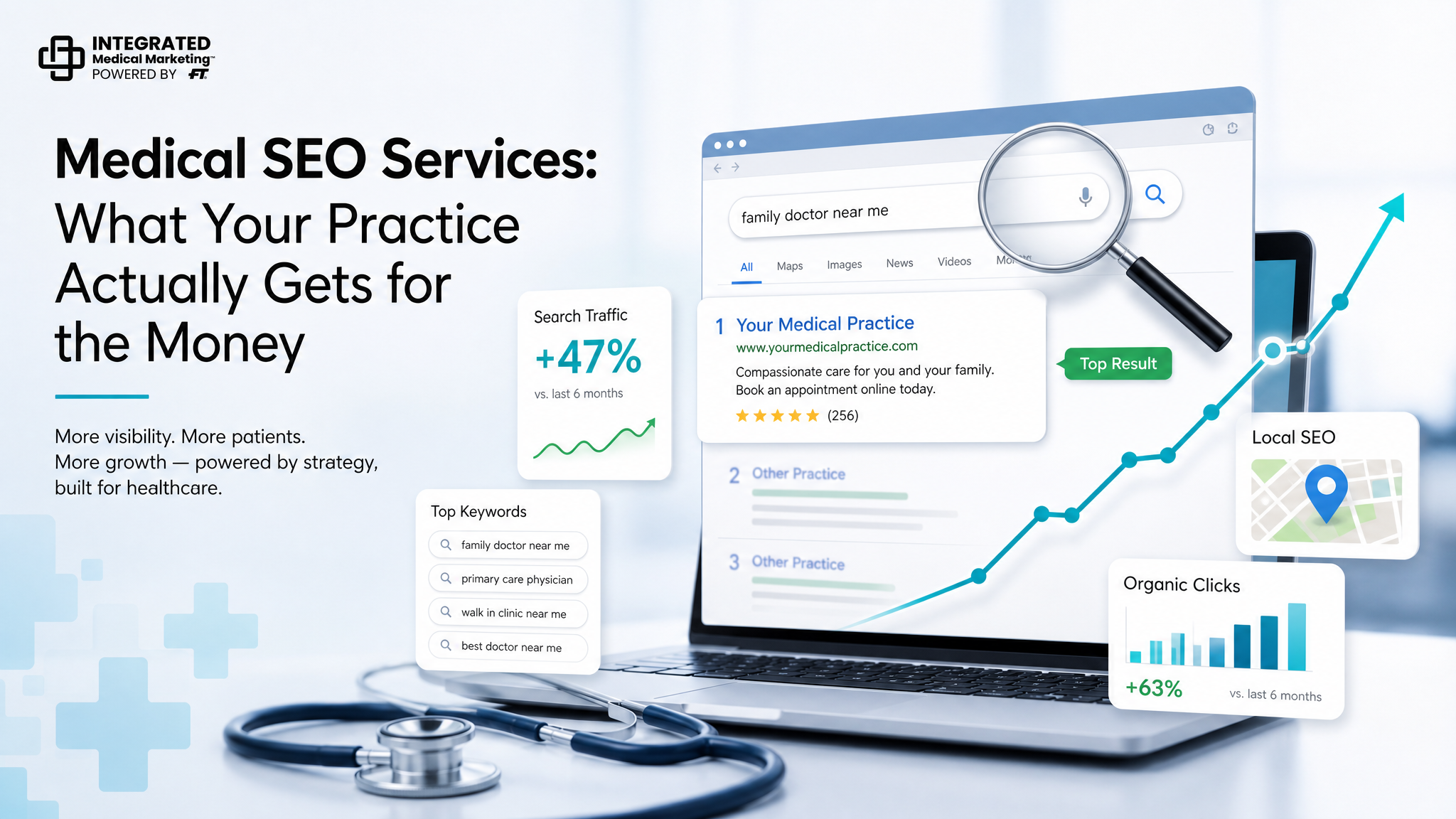
Your monthly report says impressions are up, but the front desk says the phone is quiet. That gap is the most common frustration practice owners bring to us about medical SEO services, and it’s rarely a reporting error. It’s a strategy built around traffic instead of booked appointments. Before you renew with anyone, it helps to know what medical SEO packages should include.
What You Are Actually Paying For
The Work Behind the Report
Most retainers cover four things: technical cleanup, page optimization, content, and local listings. Ask where last month’s hours went. If nobody can answer, that’s your answer. Honest work maps plainly to Google’s own SEO starter guide.
What Belongs on the Invoice
You should see named pages, named keywords, and dates. Line items like “ongoing optimization” hide thin work. Our paid campaigns convert at roughly 10 percent against a 3.75 percent national average, and that only happens because every task ties to a page you can open.
Patients Don’t Search the Way Other Buyers Do
Symptom First, Provider Second
Someone who spots a suspicious mole searches the symptom, not the dermatologist. They skim three results, then decide who sounds credible. That order matters. Practices that optimize only service pages miss the search that starts the decision.
Answer the Question, Then Offer the Visit
Build one short page per common patient question, then link it to the matching service page and a scheduling button. Keep clinical claims off it. Let credentials and easy booking do the persuading.
Local Search Decides Who Gets the Call
The Ten Mile Problem
Most patients won’t drive past two closer practices to reach you. Your real competition is a few providers inside a small radius, and the map pack shows only three. Ranking fourth locally is the same as not ranking.
Treat Your Profile Like a Landing Page
Your Google Business Profile carries hours, categories, photos, and reviews, and Google’s guidelines for representing your business are specific about filling it out. Pick the most precise primary category. Update it whenever a provider or service changes.
A Fast Site Ranks, A Clear Site Books
Speed Is Both a Signal and a Patience Test
Pages that take more than three seconds lose people before the content loads. Mobile is where most patients start. Test your site on a phone, on cellular data. That’s the real condition.
Shorten the Path to the Appointment
Count the clicks between your homepage and a confirmed appointment. More than three, and you’re losing patients who were ready. A medical practice website wired directly to your scheduling system removes the step where people quietly give up.
Measuring Medical SEO Services Without Vanity Metrics
Impressions Don’t Book Anyone
Impressions, sessions, and keyword counts move before revenue does. They’re useful early signals and poor goals. A report leading with them is usually avoiding a harder number. Ask for it.
Count Calls, Forms, and Kept Appointments
Track calls from search, form submissions, and appointments that actually happened, then divide spend by new patients acquired. The Medical Group Management Association publishes benchmarking data that helps you judge whether that figure fits your specialty.
What a Realistic Timeline Looks Like
The First 90 Days
Early work is unglamorous: fixing crawl errors, rewriting titles, claiming listings, publishing the first content. Expect indexing and impressions to move, not rankings. Anyone promising page one in 30 days is selling something else.
Months Four Through Twelve
Positions typically settle between months four and six, then compound. Content published in month two often produces its first consultation in month five. Patience here isn’t passivity. It’s the shape of the curve.
Frequently Asked Questions
Q: How much should a practice budget for SEO? A: Most independent practices land between $1,500 and $5,000 monthly, depending on locations and specialties. The better question is cost per new patient. If one patient covers the fee, the budget works.
Q: Can we handle this in-house? A: Parts of it. Reviews and profile updates are often better handled by your own staff. Technical work and content strategy need time your team doesn’t have.
Q: Will SEO conflict with our Google Ads? A: No. Paid buys immediate visibility on high-intent terms. Organic builds a base that keeps producing after the budget pauses.
Ready to See Where Your Practice Stands?
Good medical SEO services come down to a few habits: work traceable to specific pages, visibility inside your real service radius, a site that makes booking simple, and measurement tied to appointments rather than impressions. For a clear read on where your site sits today, our USA-based team will run a free website and marketing analysis and walk you through what we find.