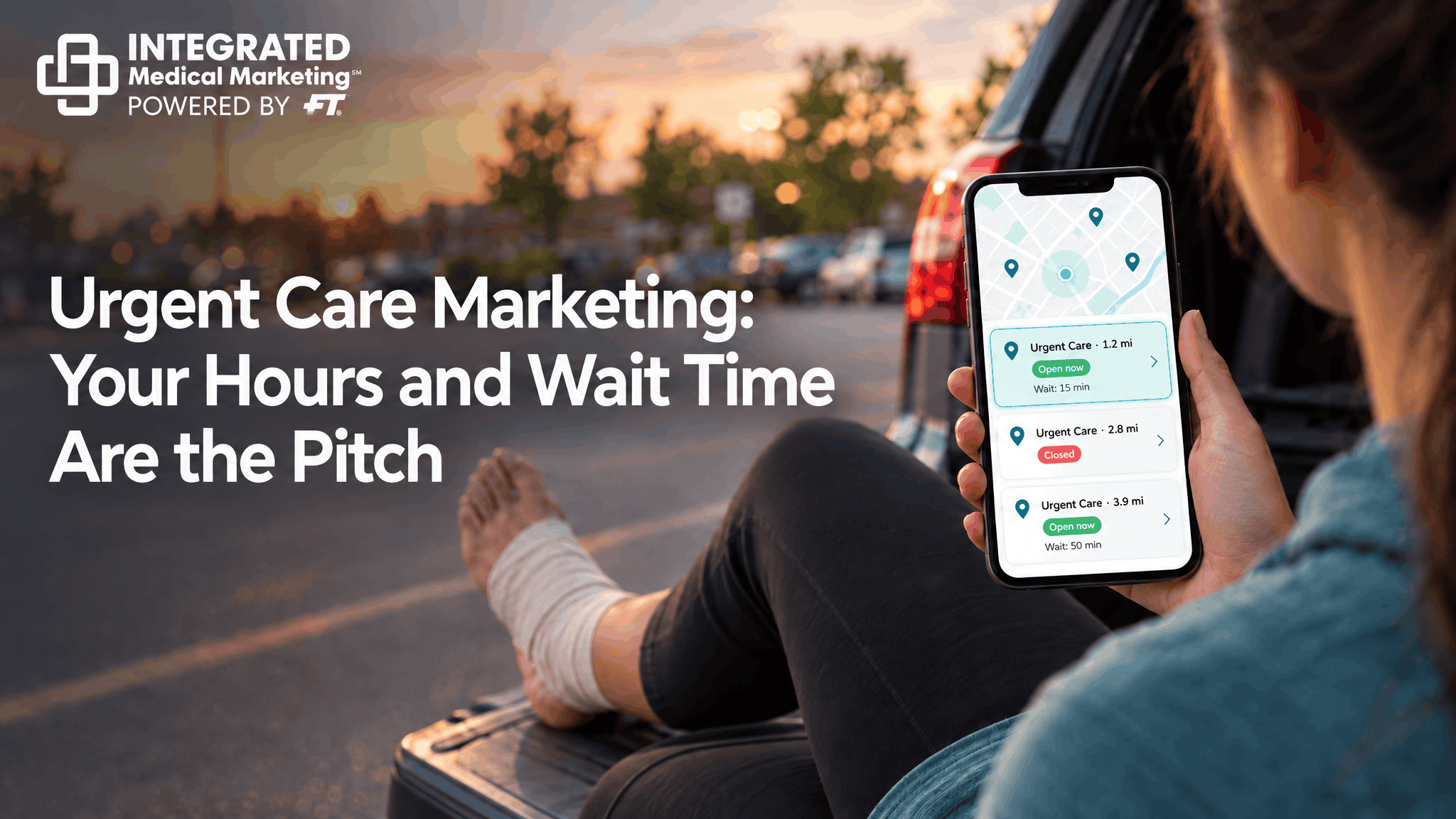
A sprained ankle at 6:40 on a Saturday. Urgent care marketing gets decided right there, in a parking lot, by a patient holding a phone with three centers inside four miles. Nobody is comparing philosophies of care. They want the closest door that’s open and quick. What wins that visit is a medical website answering four questions fast.
What Urgent Care Marketing Is Actually Competing On
The Patient Is Triaging, Not Shopping
The AMA’s Council on Medical Service counted more than 9,600 urgent care centers in 2019, a 9.6 percent jump in one year, crediting the public’s expectation of prompt, convenient care. That expectation is the entire buying process. No reviews get read. No physician bios get opened.
Answer Four Questions Above the Fold
Open right now, how far away, what you treat, and what insurance you take. Put all four on the homepage and on every location page, in text a phone renders without zooming. Your credentials paragraph can wait. Logistics close the visit.
Stop Building Campaigns Against the Emergency Room
Most ER Visits Were Never Yours to Win
That same AMA report notes only 3.9 percent of emergency department visits are considered nonurgent, with another 24 percent semi-urgent. The diversion story oversells itself. Your real competition is the patient who’d otherwise wait days for a primary care slot, or do nothing.
Win the “Where Should I Go” Search Instead
Publish plain pages on what you handle: stitches, X-rays, strep, sprains, and when someone should go elsewhere. AMA policy asks centers to keep “emergency” out of their names and marketing, so describe capability rather than borrowing the word. Clarity ranks. Vagueness doesn’t.
Hours Are a Ranking Asset, Not an Afterthought
“Open Now” Drops You Quietly
Patients filter by what’s open. A profile still showing last spring’s Saturday hours disappears from the results that matter most, on the evenings and weekends when demand peaks. Nobody reports that loss. The phone just gets quieter.
Set Special Hours Before Every Holiday
Google Business Profile lets you set special hours for up to six days in a row without touching your regular schedule, and recommends confirming them for official holidays even when nothing changes. Anything seven days or longer needs the temporarily closed status. Check it quarterly.
Demand Arrives in Waves and Budgets Usually Don’t
January and August Are Different Businesses
Respiratory season fills the lobby. Back-to-school brings sports physicals, which are scheduled, priced differently, and not urgent at all. A flat monthly paid media budget overspends in a quiet June and runs dry the week you needed it most.
Pace Spend to the Curve, Not the Calendar
Search Engine Land’s guidance on PPC budgeting favors incremental moves, raising daily budgets roughly 10 to 20 percent at a time so bidding can adjust, plus dayparting toward the hours that actually produce calls. For most centers that means evenings, weekends, and the first cold snap.
Employers Are the Customer You Aren’t Marketing To
Occupational Medicine Pays on a Different Schedule
Pre-employment physicals, DOT exams, drug screens, and workers’ compensation injuries arrive under contract, bill predictably, and flatten the seasonal swing. Most centers treat them as overflow. The HR manager signing that contract never searched “urgent care near me.”
Build One Page for the HR Manager
Give employers their own page: services offered, turnaround time on results, billing arrangement, and a direct line that skips the patient queue. Then call the twenty largest employers inside your drive radius. One page. One list.
Walk-In Patients Never Fill Out a Form
Lead Counts Describe the Wrong Business
Appointment-based practices measure form fills. Urgent care measures arrivals, and most of those were never a trackable lead. Judge a channel on submissions and your best campaign will look dead. Arrivals are the metric.
Three Numbers Worth Reviewing Monthly
Calls and direction requests per location, visits per hour open, and cost per visit by source. Run all three by site, never sitewide. A location clearing 60 visits a day and one clearing 18 don’t share a marketing problem.
Frequently Asked Questions
Q: How much should an urgent care center spend on marketing? There’s no single number, and anyone quoting one hasn’t seen your market. Start from what a visit is worth and how many open hours you need to fill. Fund two channels properly, local search and paid search, before adding a third.
Q: Does urgent care SEO still work when everyone searches “near me”? Yes, though the win looks different. Near-me results turn largely on proximity, hours, and profile quality rather than long articles. Fix those first, then build pages for services people search by name, like X-rays, stitches, and sports physicals.
Q: Should we publish wait times if they’re sometimes long? Usually yes, because a patient with no information assumes the worst. If the number embarrasses you, that’s an operations signal, not a marketing one. Never post a wait you can’t keep accurate.
Turn Access Into Visits
Urgent care marketing rewards whichever center is easiest to verify: open, close, capable, covered. Get the hours right, answer the where-should-I-go question, pace spend to the season, and count arrivals instead of leads. If you’d like an honest read on how your center looks to a patient deciding tonight, request a free website and marketing audit from our USA-based team.