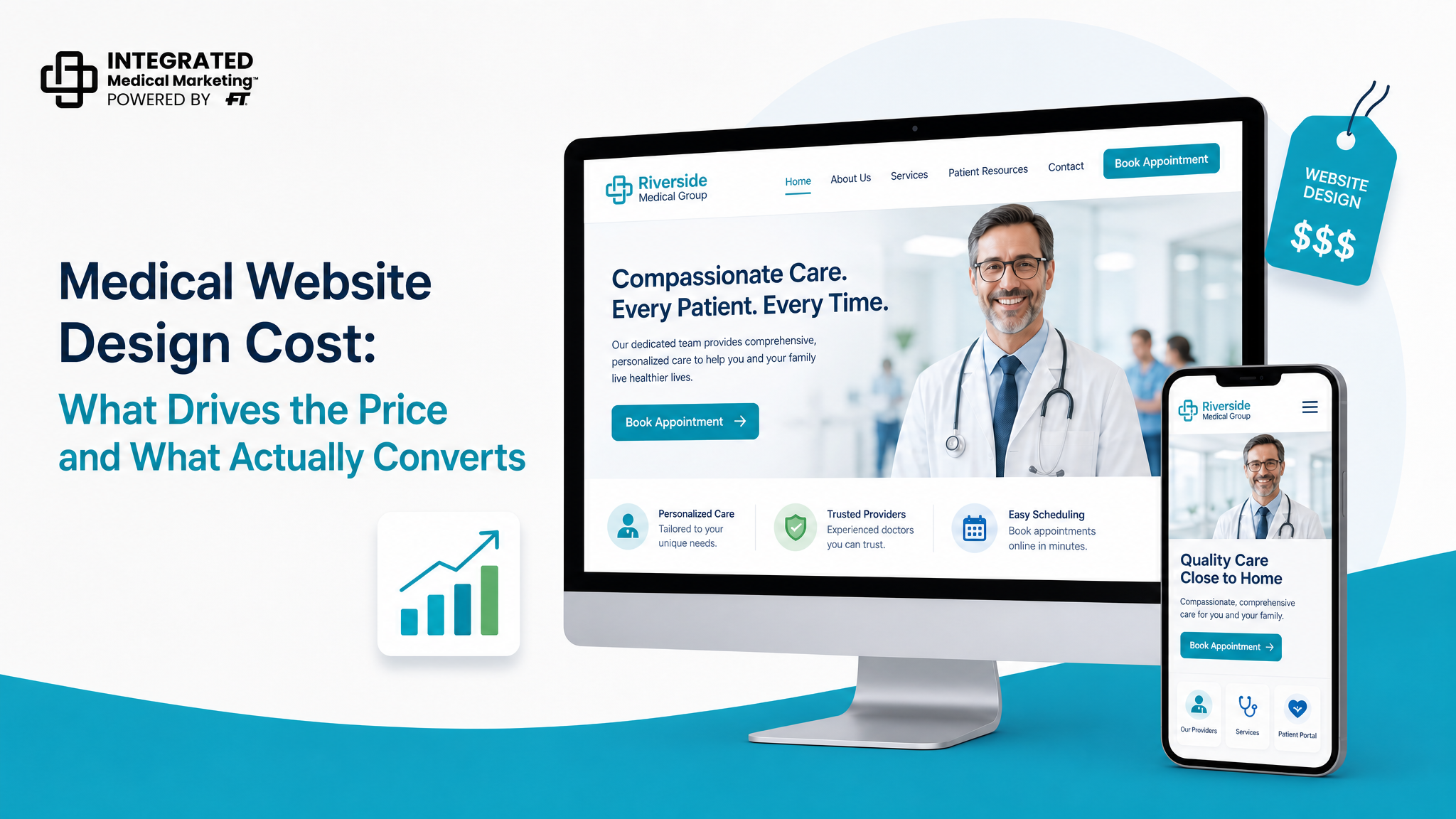
Three agencies quote your practice. One says $4,000, one says $18,000, one says $60,000, and all three describe roughly the same website. That spread is what makes medical website design cost so hard to judge. The price isn’t arbitrary. It tracks decisions about pages, content, integrations, and compliance, and those decisions also determine whether your new medical practice website books appointments or just looks good.
What a Medical Website Design Cost Actually Covers
Same Word, Very Different Scope
“Website” means different things to different vendors. A low-end build is a five-page template, stock photography, and copy written in an afternoon. A higher-end build is architecture, original content, and working integrations. Both are websites. Only one brings in patients.
Make Them Itemize the Quote
Ask for line items before you compare totals. Pages built. Who writes the copy. Which integrations are included. Hosting and support after launch. A vendor who walks you through how a project runs from onboarding to launch is easier to hold accountable than one quoting a lump sum.
Page Count Is the First Real Cost Driver
Five Pages Is a Brochure
Most entry-level medical builds include five pages: home, about, services, contact, and one more. That covers a single service line. An orthopedic group with nine procedures and four surgeons doesn’t fit, and one combined services page won’t rank for nine different patient searches.
Price Pages Against Revenue
Rank your service lines by revenue, then build a dedicated page for the top five. Each answers candidacy, what the visit involves, and a real price range. Add provider bios. That’s twelve to fifteen pages, and it’s the biggest honest difference between a cheap quote and a serious one.
Content and Credibility Cost More Than Design
Stock Copy Reads Like Stock Copy
Templated service text is the most common corner cut, and patients can tell. It’s also what search engines see on a thousand other practice sites. Credibility is specific. A dermatologist’s own explanation of a procedure beats a paragraph bought by the word.
Budget for Words and Faces
Put real money against two things: content and photography. A half-day shoot of your team beats a library of stock models. Physician bios with credentials, training, and hospital affiliations do double duty for patient trust and for search. Neither is optional.
Speed and Booking Decide Whether the Site Pays Back
Patients Leave Before They Read
Most patients reach your site on a phone, often on cellular data. Google’s Core Web Vitals thresholds set the bar: largest contentful paint under 2.5 seconds, interaction to next paint under 200 milliseconds, layout shift under 0.1. Miss those and design stops mattering.
Connect the Scheduler, Not Just a Form
A contact form is a request. Live scheduling is an appointment. Wiring in a real booking system (Calendly, vCita, SimplePractice, or your patient portal) costs more up front, and it’s usually where the return shows up. Ask which integration the quote includes.
Accessibility and Compliance Are Line Items Now
The Requirements Behind the Invoice
Accessibility is no longer optional for many practices. HHS requires web content and mobile apps from recipients of its funding to meet WCAG 2.1 Level AA, with deadlines of May 11, 2027 for recipients with 15 or more employees and May 10, 2028 for smaller ones. Retrofitting costs more.
Ask for the Standard in Writing
Put the standard in the contract: WCAG 2.1 AA, tested, with a report you can keep. Confirm SSL, secure form handling, and where submissions are stored. We treat compliance as a design requirement, not a disclaimer bolted on at the end. Budget builds skip it entirely.
The Redesign Trap and the Year-One Budget
A New Site Can Cost You Rankings
Practices launch a beautiful redesign and then watch search traffic fall. The usual culprits, as Search Engine Land documents, are new URLs without 301 redirects and staging sites that go live with noindex tags still in place. Design was never the problem.
Plan Twelve Months, Not One Launch
Your real number is year one, not launch day. Add hosting, SSL renewal, security updates, content additions, and someone accountable when a page breaks. Ask what year two costs before you sign. A site nobody maintains ages fast.
Frequently Asked Questions
Q: What should a practice expect to spend? It depends on scope. Any agency quoting a number before asking about your service lines is guessing. A solo provider needs far less than a multi-location group with twelve procedure pages and a scheduler integration. Compare itemized quotes, not totals.
Q: Is a redesign worth it if our site looks fine? Looks are the last thing to check. Pull your numbers first: how many visitors request an appointment, and from which pages. If traffic is healthy and requests aren’t, the problem is structure and booking flow, not design. That’s cheaper to fix than a rebuild.
Spend Where It Books Patients
A fair medical website design cost tracks scope: pages that match your service lines, content written for your patients, working appointment booking, and standards you can point to in the contract. Get a second opinion first. Our USA-based team will review your current site and tell you what’s working. Request your free website and marketing audit to start.